Place · A Field Guide

The Trees of Davis

A city built under a canopy — and the stories rooted in it.

Scroll to begin ↓
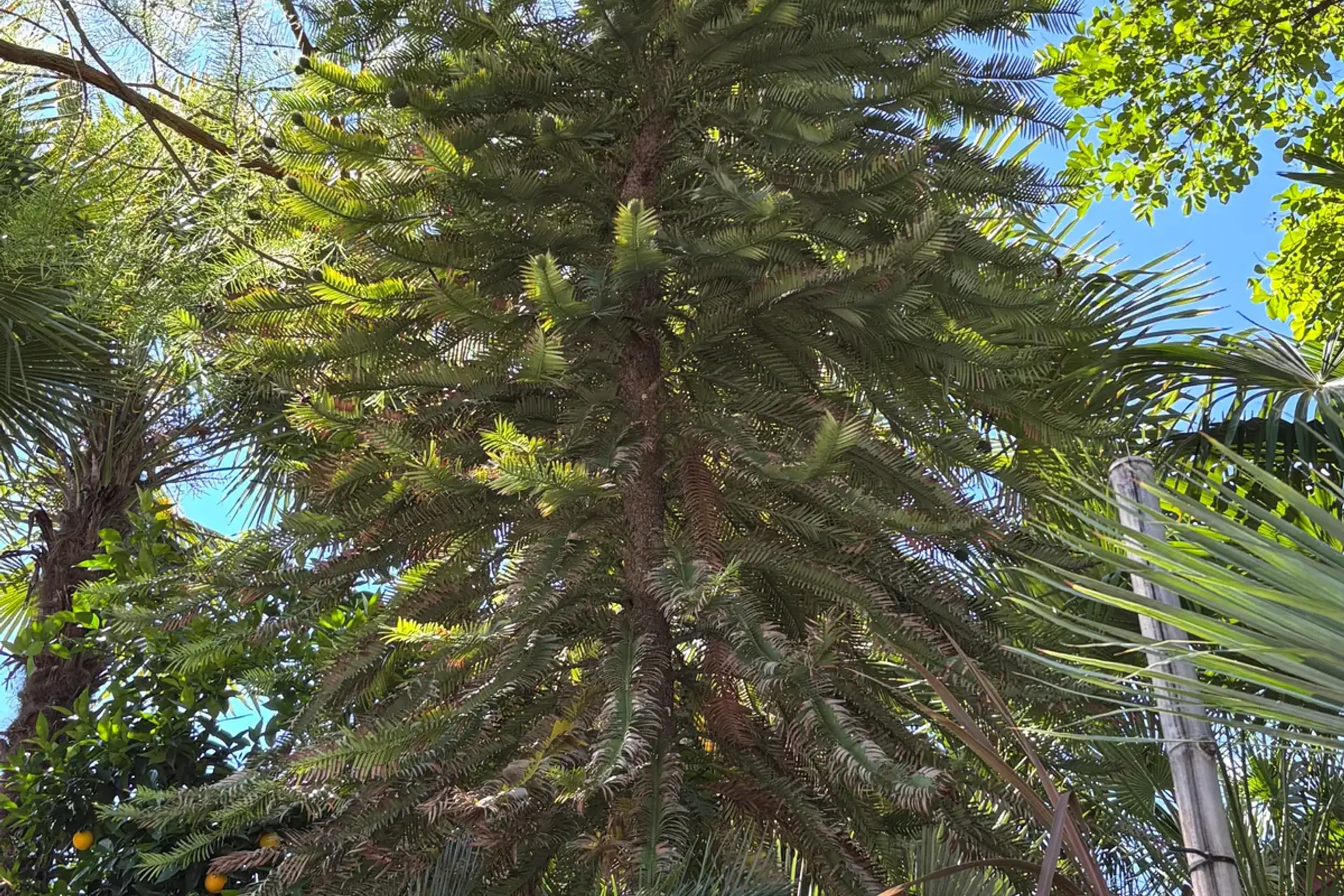
The Wollemi pine growing in a West Davis front yard
Tree No. 01 · Living Fossil

The Wollemi Pine

A tree that outlived the dinosaurs, growing on a street called Dinosaur Place.

Read the story ↓
Wollemia nobilis 2136 Dinosaur Place, West Davis

Two hundred million years ago, this tree shaded dinosaurs. It vanished from the fossil record two million years ago, and modern science assumed it was gone for good. Then in 1994, a park ranger named David Noble was rappelling into a remote canyon in Australia’s Blue Mountains and looked up at a tree he didn’t recognize.

He had just rediscovered the Wollemi Pine — one of the rarest plants in the world, and one of the oldest. Fewer than fifty mature specimens still grow in the wild. The Australian government keeps the exact location of the grove a state secret, and during the 2019–2020 bushfires, helicopters winched specialist firefighters into the canyon in a covert mission to save them.

One of those trees grows in front of a house in West Davis.

Paul Kelly lives on Dinosaur Place, a quiet street tucked into a West Davis neighborhood where someone, decades ago, decided to name every road after something prehistoric. In 2006, the National Geographic Society began offering a limited number of Wollemi seedlings to the public — the first time anyone outside a botanic garden could own one. Kelly got his the following year and planted it in his front yard as a ten-inch sapling. It’s now over eleven feet tall and still climbing.

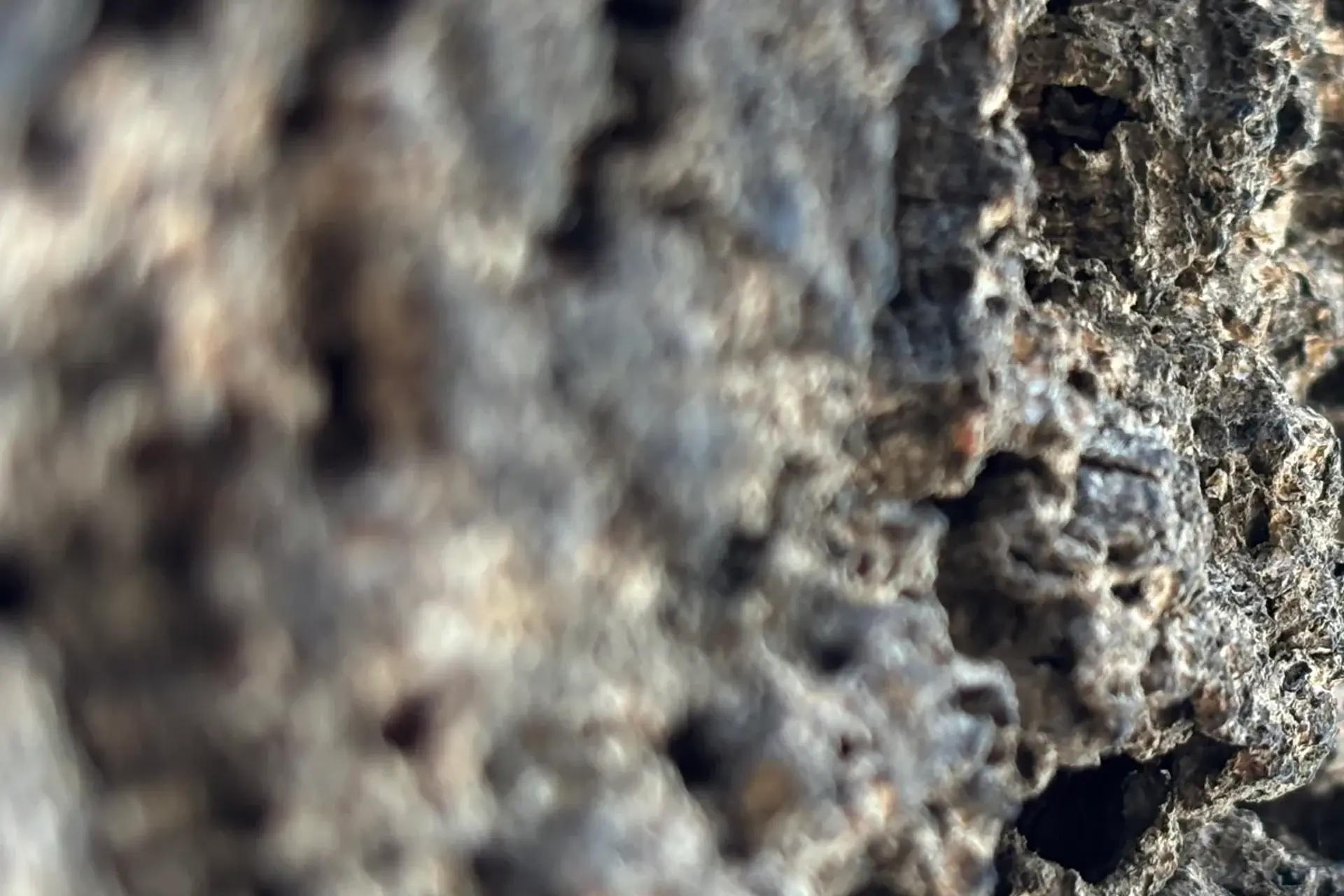
Stand in front of it and you’re looking at a species that watched continents drift apart. The bark looks like bubbling chocolate. The foliage isn’t quite needles and isn’t quite fronds — something the family Araucariaceae works out for itself. At maturity, in the right conditions, a Wollemi can reach a hundred feet.

Davis has thousands of trees. This is the only one that’s a fossil.

MyDavis Insider Tip

The Wollemi is on private property — admire it from the sidewalk, please. While you’re on Dinosaur Place, look one yard over: Kelly also has a Mexican Blue Fan Palm (Brahea armata) on the city’s landmark tree list. Two heritage trees, one front yard.
02
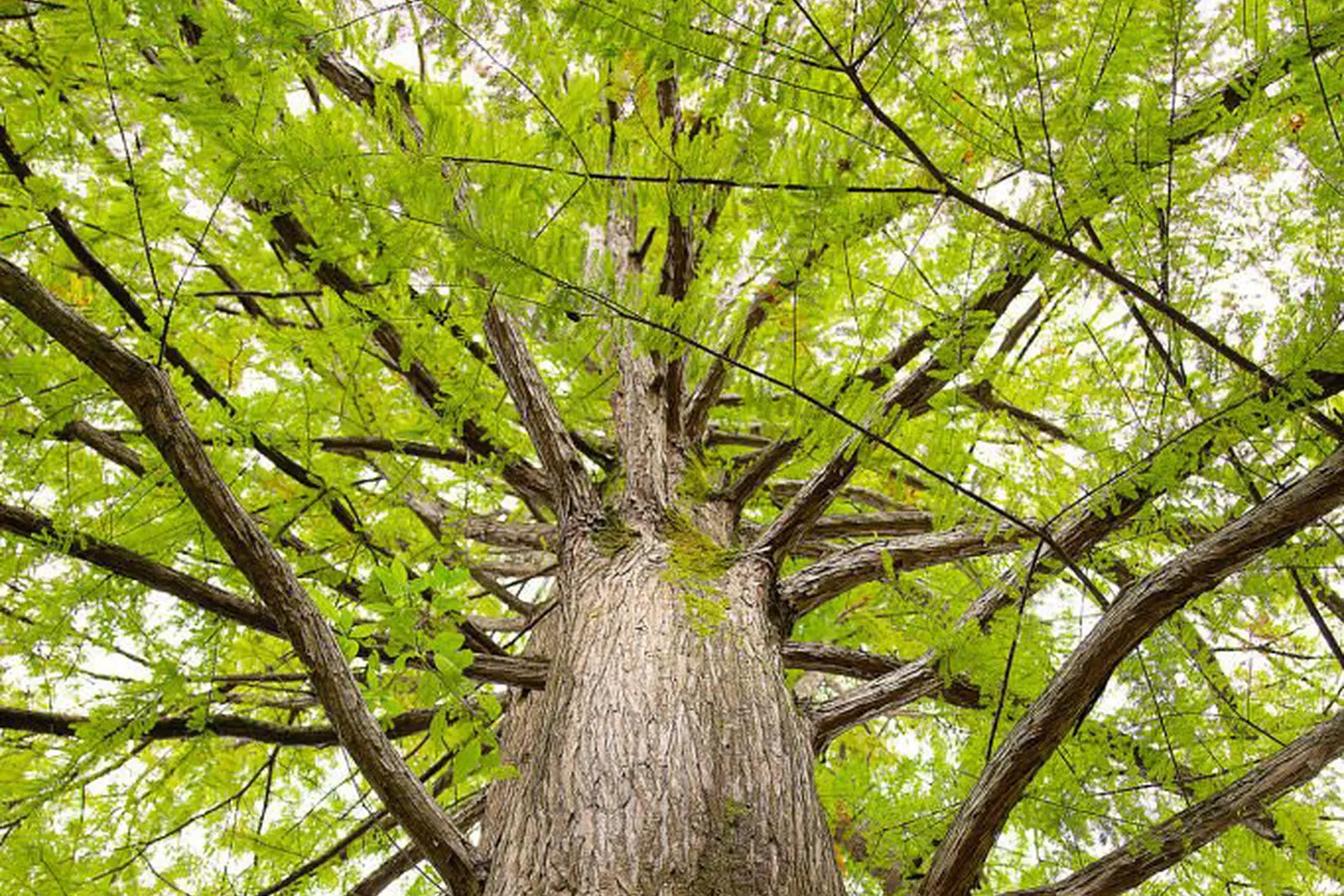
The dawn redwood on Oak Street in downtown Davis
Tree No. 02 · Living Fossil

The Dawn Redwood

Known only from fossils — until a forester walked into the wrong valley in 1944.

Read the story ↓
Metasequoia glyptostroboides 631 Oak Street, Downtown

For decades, villagers in a remote valley in Sichuan Province — now part of neighboring Hubei — cut its trunks for firewood and rafters. They called it shui shan — water fir. They had no idea they were chopping lumber from a species that science believed had been extinct for two million years.

In 1944, a Chinese forester named Wang Zhan walked into that valley and started asking questions about the strange deciduous conifer growing along the streams. He collected samples. Two botanists, Hu Xiansu and Wan-Chun Cheng, examined them and matched the living tree to a fossil that a Japanese paleobotanist had named three years earlier: Metasequoia. Beside the sequoia. The dawn redwood.

In January 1948, Harvard’s Arnold Arboretum distributed the first viable seeds to botanical gardens around the world. One package went to UC Berkeley. Every dawn redwood standing in California today — including the one growing in front of a house at 631 Oak Street in Davis — likely traces its lineage to that delivery.

Find it in October and you’ll catch the giveaway: the dawn redwood is the only deciduous redwood in the world. Every autumn its feathery, fern-like needles turn the color of rust and fall to the sidewalk. Every spring they grow back electric green. The trunk is its other tell — reddish, deeply fluted, with buttressed flares at the base, like the tree is bracing for something.

Davis has thousands of trees. This one came back from the dead.

MyDavis Insider Tip

Dawn redwoods are easy to mistake for bald cypress, which Davis has plenty of — the giveaway is the leaves. Dawn redwood needles grow opposite each other along the stem; bald cypress needles spiral around it. Once you know, you can’t unsee it. Best month to visit: late October into early November, when the fall color peaks just before the needles drop.

03
Tree No. 03 · The Grove

The Cork Oaks of Olive Drive

Ten trees, one street, and the species that bottles California wine.

Read the story ↓
Quercus suber Olive Drive, South Davis

In 1940, German U-boats began sinking the cargo ships that carried cork from Portugal to American factories. The federal government declared cork a “critical” wartime material — not as essential as copper or steel, but close. Bottle stoppers, gaskets, life-jacket linings, fuel-tank seals: all of it depended on a tree that grew almost exclusively in the western Mediterranean.

The country needed cork. Fast.

A Baltimore industrialist named Charles McManus, who ran Crown Cork & Seal, decided to grow it himself. He charted American climate zones, identified the regions where Mediterranean trees could survive — California chief among them — and recruited a UC Berkeley forestry professor named Woodbridge “Woody” Metcalf to lead the western operation. By the end of the war, 4-H clubs and garden clubs had planted millions of acorns from coast to coast. Governor Earl Warren himself planted a cork oak at the state capitol on Arbor Day, 1944.

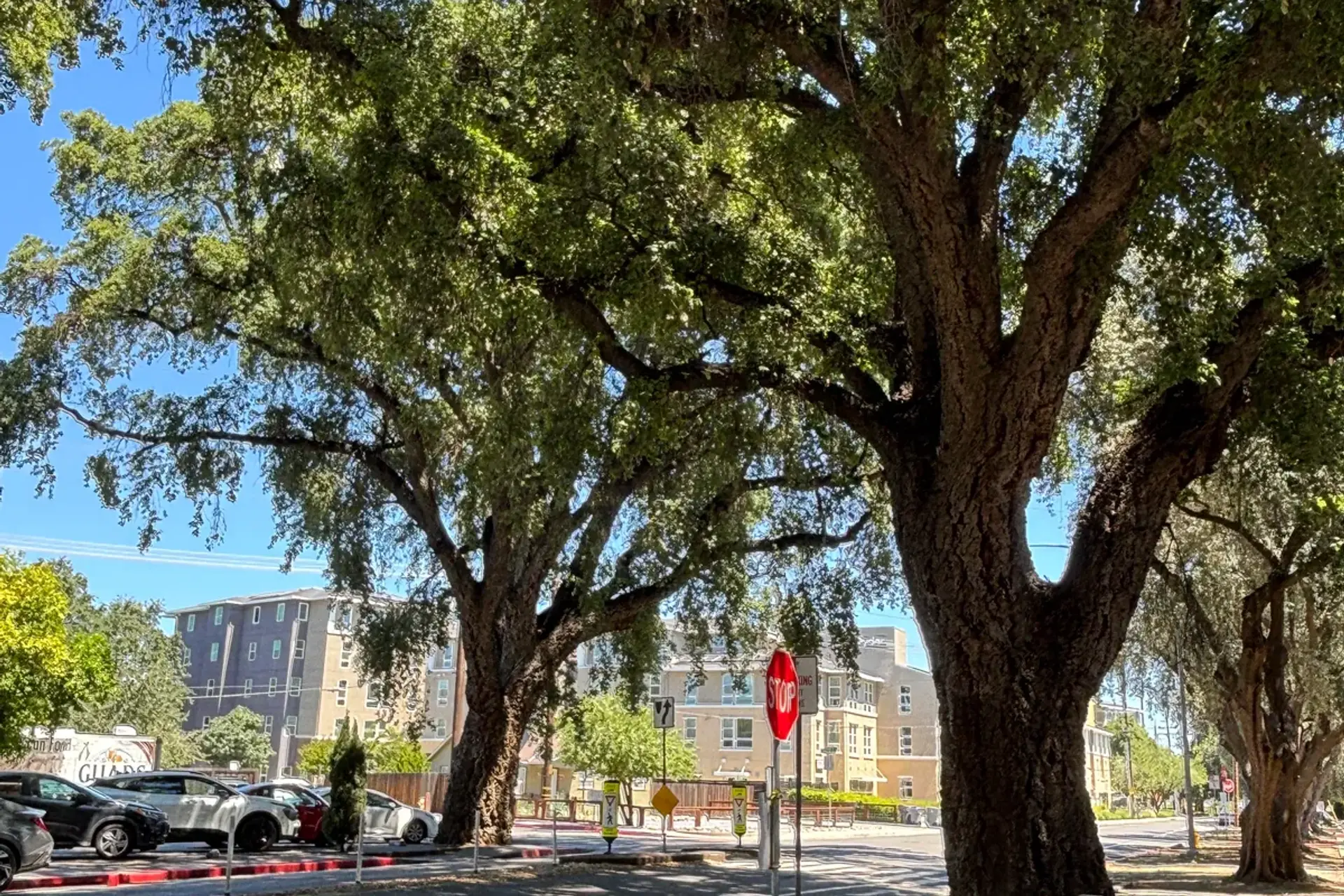
Metcalf personally managed the planting of the cork oaks that still stand near Mrak Hall on the UC Davis campus. Whether his hand reached the row on East Olive Drive isn’t documented — but ten Quercus suber line that street, between 1020 and 1233, on a stretch of road named, ironically, for a different Mediterranean crop entirely.

Most people walk under them without looking up. The bark is the tell: deeply fissured, spongy, with the same corky give you’d recognize from any wine bottle. In Portugal, mature cork oaks are stripped every nine years for two centuries. The trees on Olive Drive have never been touched.

Davis has thousands of trees. This row was planted to win a war.

MyDavis Insider Tip

Walk Olive Drive east of the depot to see the whole row in one stretch. Press a palm against the bark — it gives slightly, like dense foam. A few miles south, there’s a residential street called Cork Place. The naming was probably coincidence. But it’s a coincidence we’ll take.

04
The tree canopy along the College Park loop in Davis
Tree No. 04 · Accidental Arboretum

The Trees of College Park

One old neighborhood, more than a dozen rare species, no plan.

Read the story ↓
Multiple species College Park, Central Davis

In 1923, UC Davis was a small agricultural school with a recruitment problem. The state’s flagship campus was in Berkeley; the new outpost across the bay couldn’t lure professors with prestige, so the university tried real estate instead. The administration carved an egg-shaped loop street out of farmland directly across from campus, built houses along it, and sold the lots for $475 to $500. The pitch was simple: move to Davis, get a home for what amounted to a few months’ salary, walk to your office.

The professors who took the offer brought their botanical interests with them.

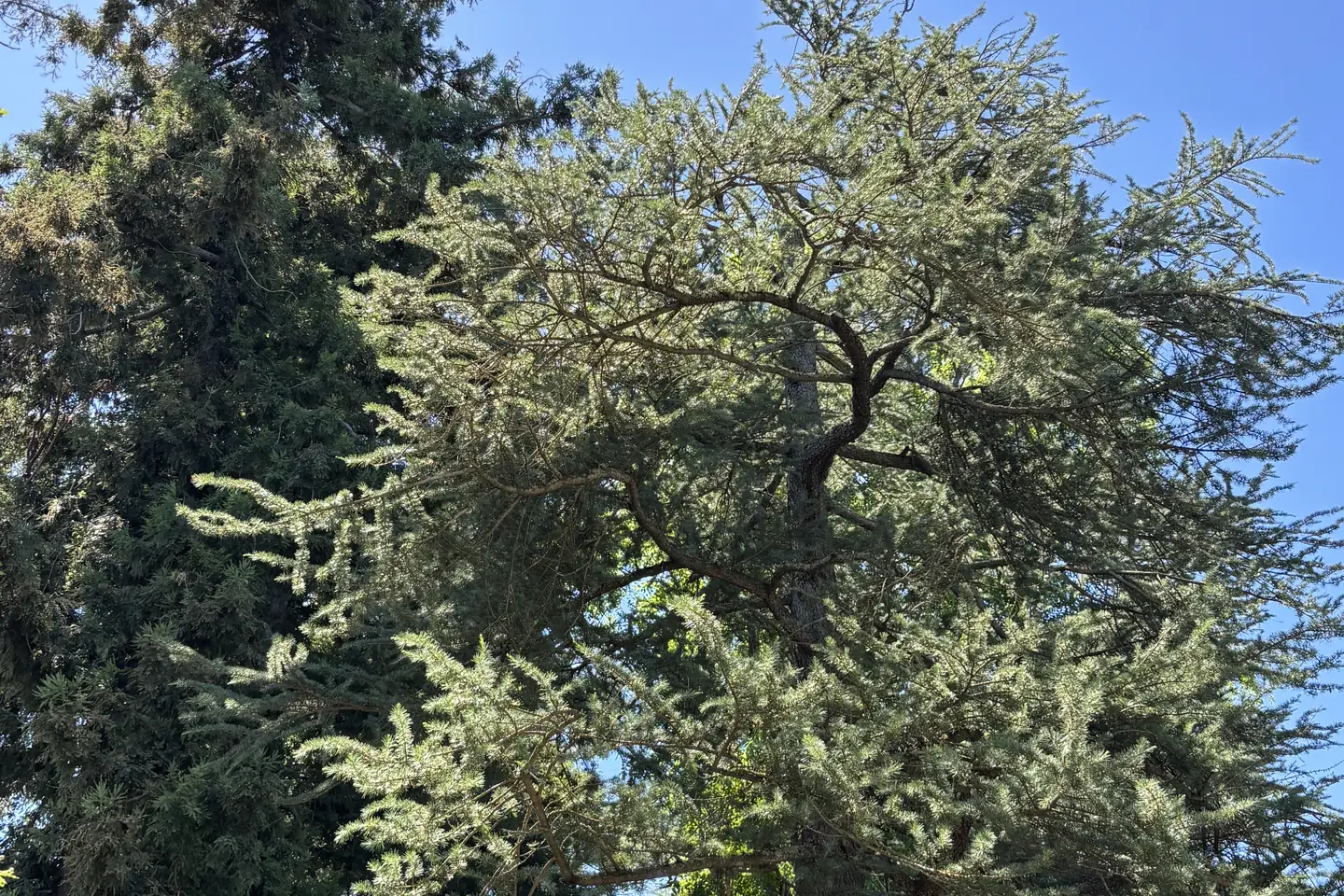
The biologist Max Kleiber moved into 34 College Park; his name is now on a campus building. George Hart took 52; same. Stanley Freeborn settled a few doors down. Each professor planted what they wanted in their front yard, with no coordination and no plan, and within a generation the loop was home to a Cedar of Lebanon, a Coulter Pine from California’s coastal mountains, a Himalayan Spruce, a Chinese Wingnut, an Aleppo Pine from the Mediterranean, a Chinese Hackberry, a Ginkgo, a Big Leaf Maple, a London Planetree, a Modesto Ash, a Valley Oak, a California Live Oak, and a small grove of Deodar Cedars whose lower branches now hang like skirts to the ground.

Until 1950, a sheep pasture separated all of this from the rest of Davis. The recruitment scheme worked. The trees outlived it.

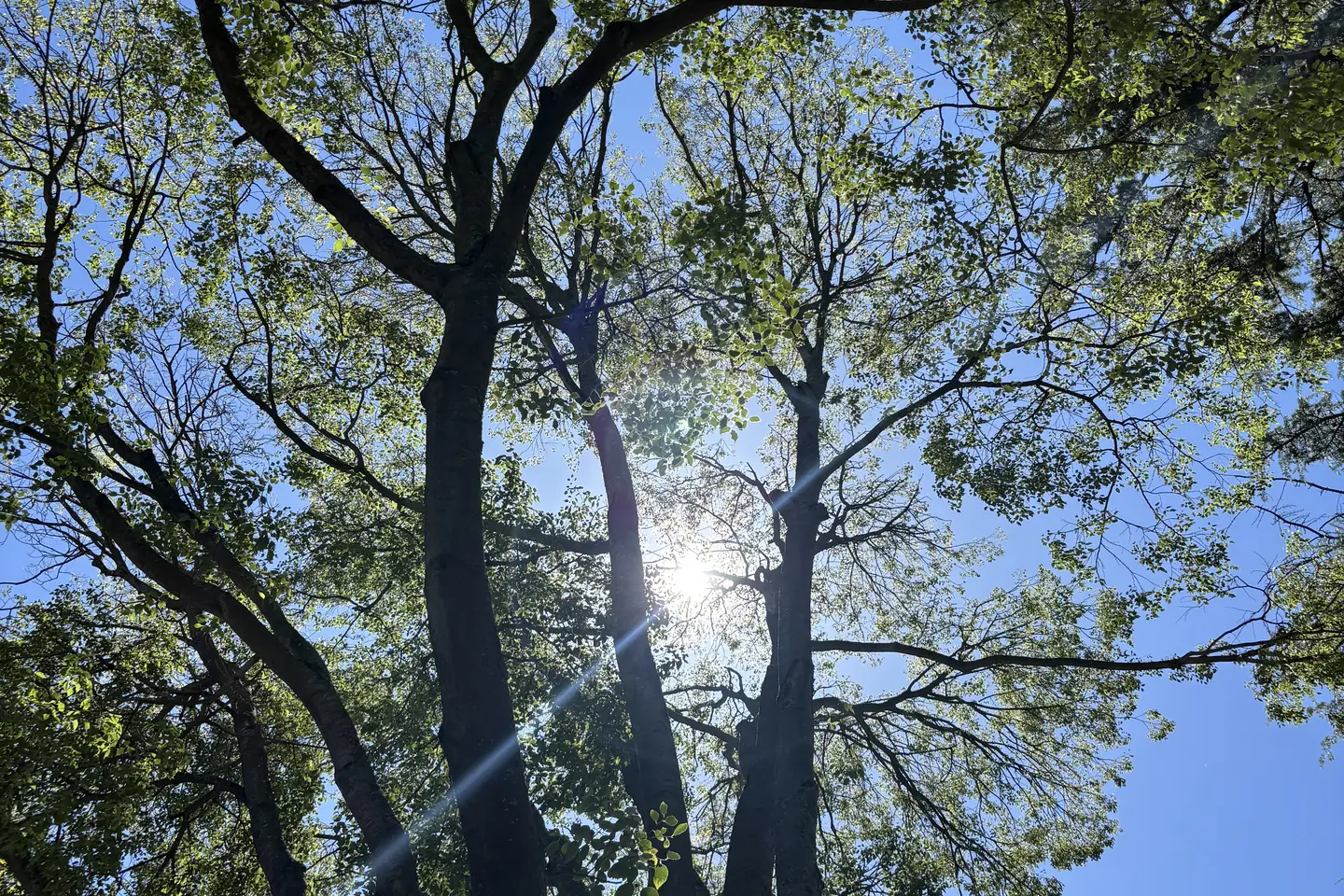
Today the entire loop is a designated City Historic District. The houses are still here, mostly still owned privately, often still inhabited by UC Davis faculty. The trees are now on the city’s landmark register, listed one yard at a time. Walking the loop counterclockwise from Fifth Street, you can pass eight separate landmark trees in under fifteen minutes without crossing a road.

Davis has thousands of trees. This whole block is one.

MyDavis Insider Tip

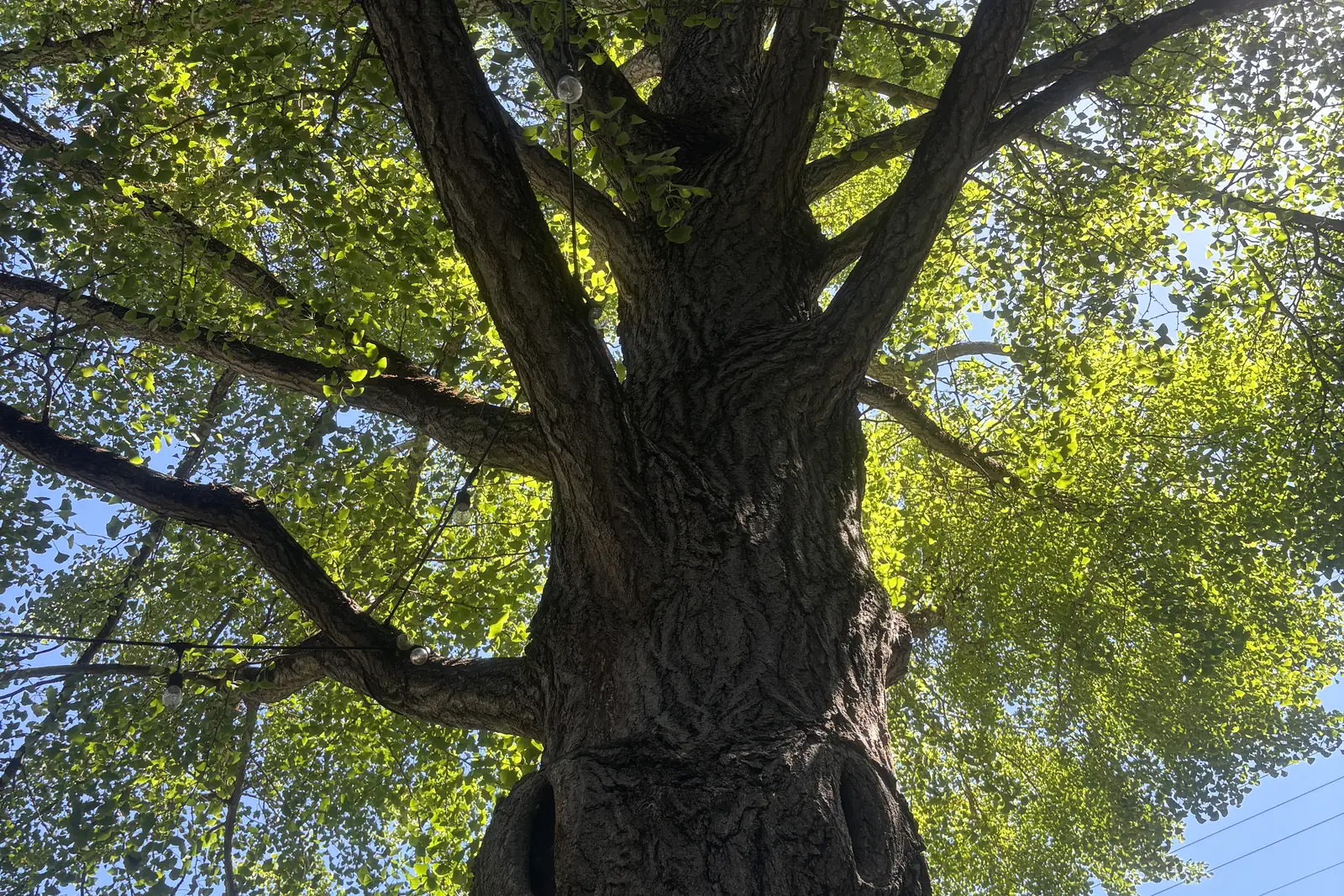
Start at the south entrance off Fifth Street and walk the loop counterclockwise. There’s a name game to play: each big yard tree pairs roughly with a UC Davis building. Kleiber Hall, Hart Hall, Freeborn Hall — find the house, then look up. Best season is October, when the Ginkgo at #24 turns the entire intersection gold.

05
The coast redwood grove at College Park in Davis
Tree No. 05 · The Grove

The Coast Redwood Grove

A pocket of Mendocino, tucked behind a College Park home.

Read the story ↓
Sequoia sempervirens 47 College Park

A coast redwood can live for two thousand years. It can grow taller than the Statue of Liberty — taller, in fact, than any other living thing on Earth. Sequoia sempervirens holds every height record there is; the tallest known specimen tops 380 feet. The species name means “evergreen.”

They grow naturally in one place: a narrow ribbon along the Pacific coast from southern Oregon to Big Sur, where summer fog rolls inland off the ocean and keeps the forest wet through the dry season. Inland California, baking through July at a hundred and three degrees, is the wrong climate. Davis is fewer than eighty miles from the nearest native grove.

There is a redwood grove behind a house at 47 College Park anyway.

No one wrote down who planted them. They went in sometime during College Park’s first generation, when a row of UC Davis professors were turning the loop into the accidental arboretum we just walked through. Whoever did it knew what they were starting. Redwoods don’t grow as solo trees; they grow as families. New trunks sprout from the buttressed base of a parent — basal shoots, genetically identical, sharing one root system. The cluster at #47 is one tree behaving like a small forest.

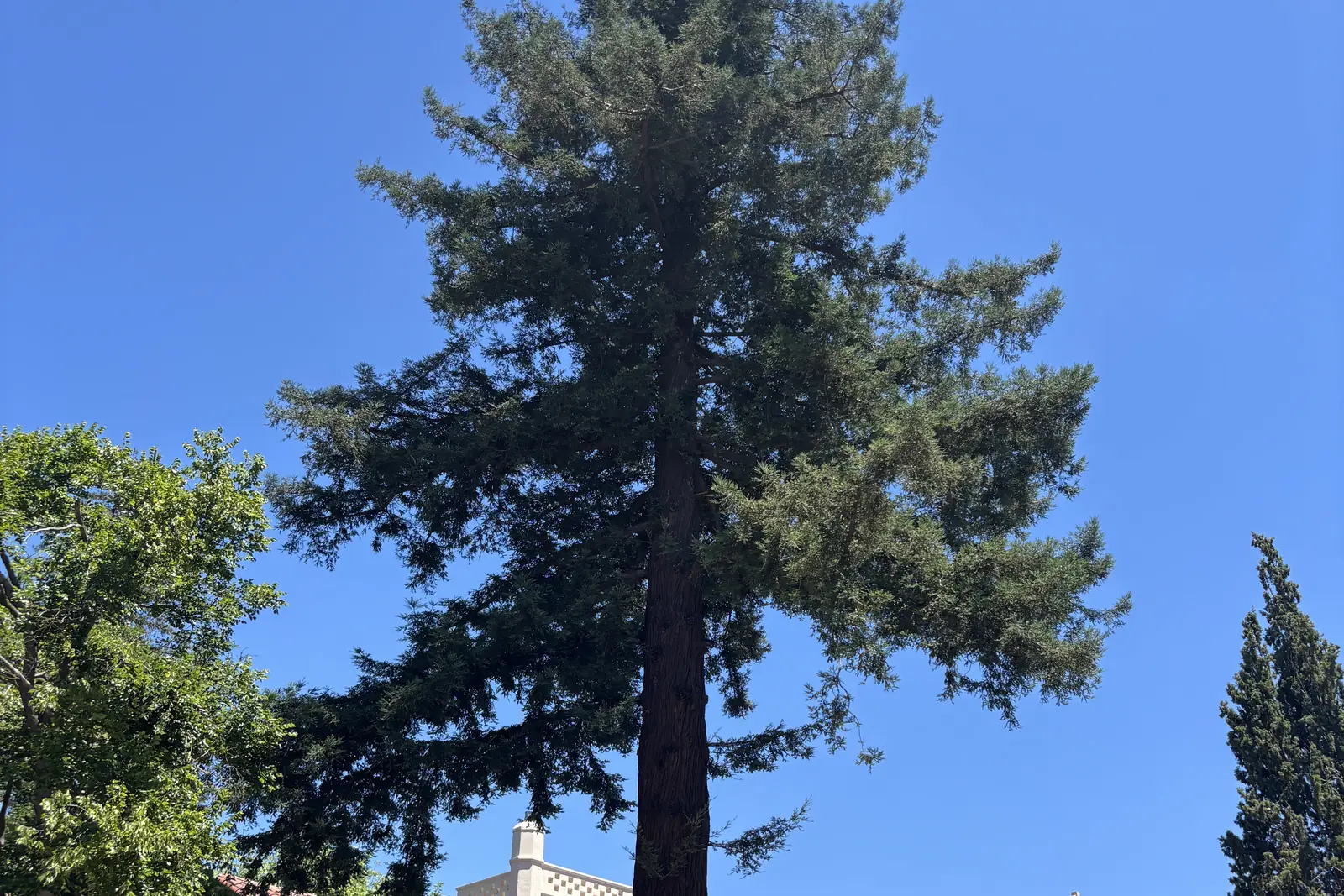
Stand underneath them in August. The temperature drops several degrees in the shade. The bark is that distinctive reddish corduroy, fibrous and soft to the touch, full of tannins that fight off fire and insects. Look up the trunks and try to find the tops. You won’t.

Davis has thousands of trees. These are still children.

MyDavis Insider Tip

Visit in late afternoon on a hot day for the full effect — the temperature shift is unmistakable. Stay on the sidewalk; this is a private backyard, though the crowns tower well above the rooftop and read clearly from the street. While you’re there, look at the same yard’s Modesto Ash — also a city landmark tree, also at 47 College Park. The professors knew what they were doing.

06
Paulownia trees at the Davis Amtrak depot
Tree No. 06 · Civic Landmark

The Paulownia at the Depot

Four trees that explode purple every spring at the Amtrak station.

Read the story ↓
Paulownia fortunei Amtrak Depot, 840 2nd Street

The paulownia is the imperial tree of Japan. Its silhouette appears in the kiri-mon, the official seal of the office of the Prime Minister and one of the oldest crests of the Japanese imperial family. It is featured in The Tale of Genji, written a thousand years ago. In Japanese tradition, a paulownia is planted when a daughter is born, and harvested for the wedding chest when she marries. The tree’s Western name traces a different lineage entirely — a Bavarian botanist named Philipp Franz von Siebold, working out of Nagasaki in the 1830s, named the genus for Princess Anna Pavlovna of Russia. A tree named twice for royalty.

Four of them grow outside the Davis Amtrak station.

The depot was built in 1913 — Mission Revival, red-tile roof, on the National Register of Historic Places — at the specific request of the dean of the brand-new University Farm, who wanted a building worthy of the students his school was trying to attract. The paulownias came later, on the strip between the platform and the parking lot, planted as ornamental shade trees during a stretch of the 20th century when American cities were obsessed with importing the exotic. Most of those trees are gone now. These four are still here.

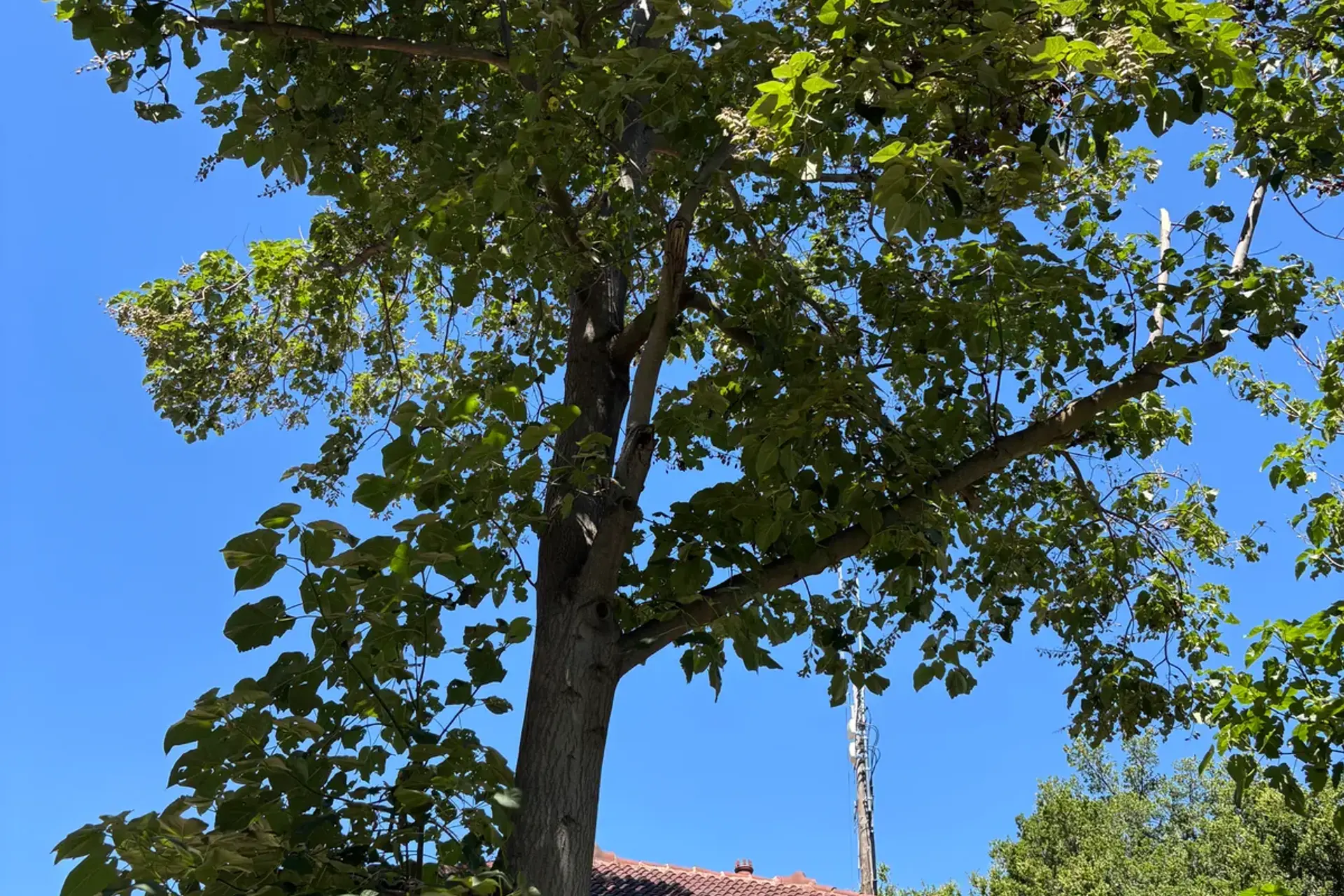
The reason to know about them is April. Before the leaves come out, the entire crown explodes into upright panicles of lavender tubular flowers, each one about two inches long, faintly fragrant. The bloom lasts maybe three weeks. From the train platform you can watch it land on the heads of commuters who are not looking up.

A quarter-million Amtrak passengers pass through this station every year. Almost none of them notice.

Davis has thousands of trees. These four bloom for an empress.

MyDavis Insider Tip

Visit in mid-April for the bloom. Get there an hour before a train and walk the perimeter of the depot — the paulownias are on the south side, near the parking. While you’re there, look for the city’s other landmark tree at the same address: a Catalina cherry (Prunus ilicifolia), a California native usually grown as a shrub but here let go to full tree height. Two species, one depot, one ticket.

07
Tree No. 07 · Davis History

The Hunt Boyer Oranges

Two citrus trees still standing at one of the oldest houses in town.

Read the story ↓
Citrus sp. Hunt Boyer Building, 604 2nd Street

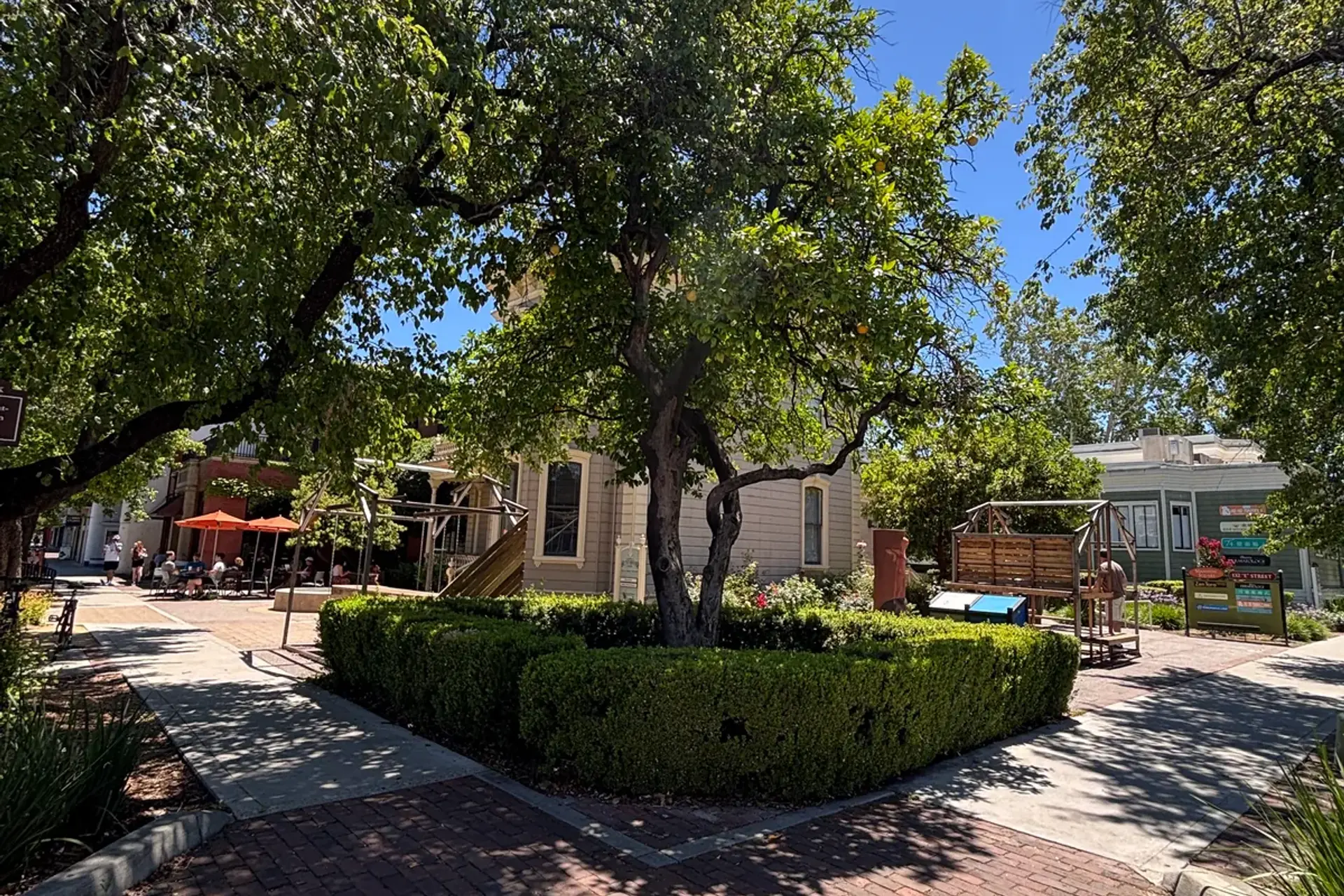
Sometime around 1875, a Prussian immigrant named William Frederick Dresbach finished building a twelve-room mansion at the corner of 2nd and E Streets in a town that was then called Davisville. Dresbach was the town’s first postmaster. He owned the livery, the hotel, the saloon, the general store, and the grain warehouse. He is the man who named the town Davisville — the railroad and the post office later trimmed it to Davis.

In the yard behind his new house, he planted an orange grove.

The mansion is still there. The grove, mostly, is not. Dresbach lost the property to bankruptcy in 1879. It changed hands twice before Frank Hunt bought it in 1899 and passed it to his brother John, who raised three children inside it. John’s daughter Mary Hunt Boyer lived in the house until her death in 1973, by which point the place had been declared a historic landmark and the orange trees were a century old. The city of Davis finally bought it in 1994 for $250,000.

Then someone built a coffee shop on part of the grove.

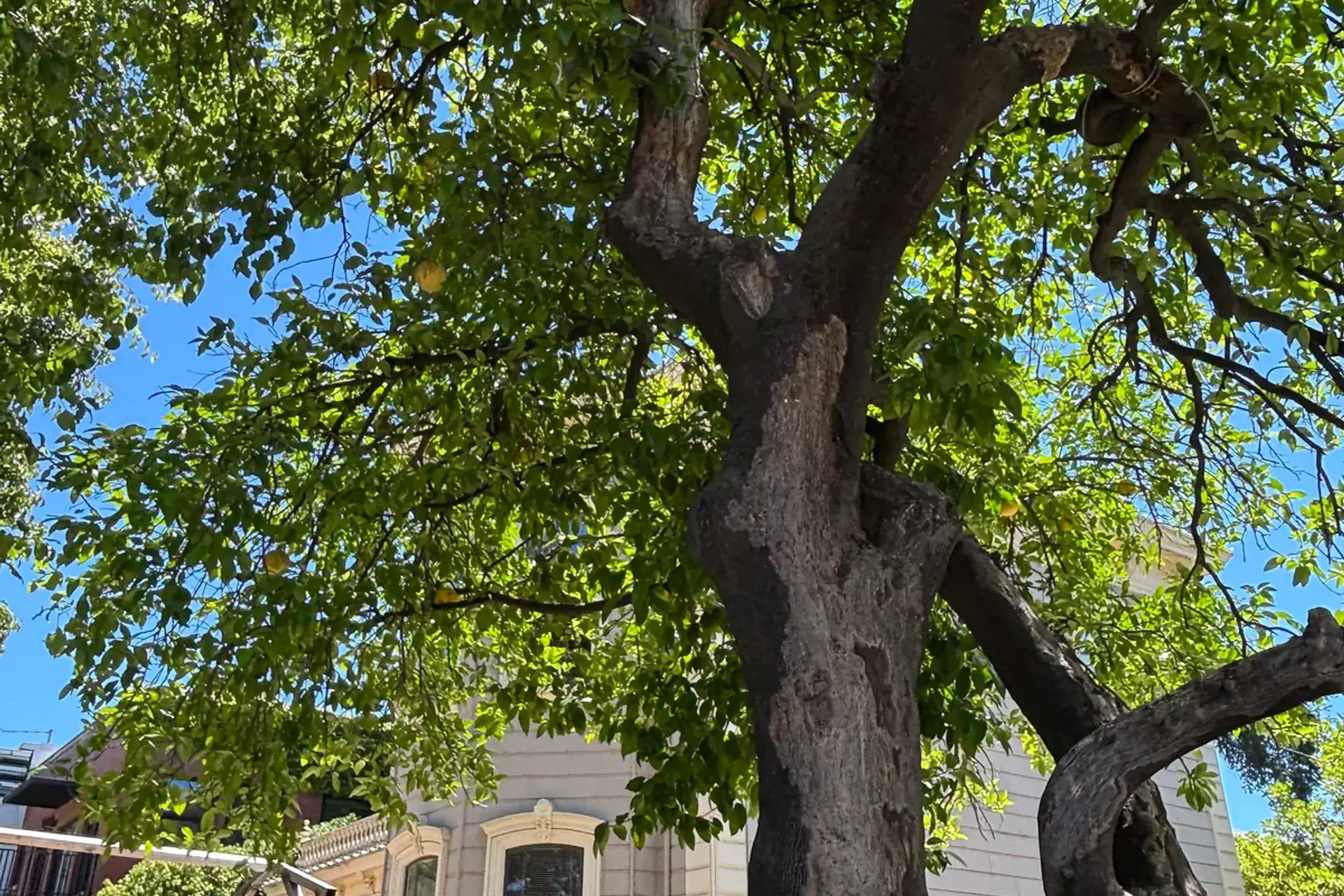
Two of the original trees are still standing, listed on the city’s landmark register at 604 2nd Street. They are, by the most generous estimate, a hundred and fifty years old. They are also, as far as anyone can determine, the oldest cultivated citrus in Davis. Walk past them on a winter morning and you can pick up a fallen orange from the sidewalk. They fruit. Most years they fruit heavily. The fruit is bitter — these are old varieties, planted before the citrus industry standardized — but you can hold one in your hand and know you are holding something from before Davis was a city.

Davis has thousands of trees. These were here when the name was.

MyDavis Insider Tip

The trees are on the grounds of the Dresbach-Hunt-Boyer Mansion, now home to the Yolo County Visitors Bureau and the city’s Parks & Community Services offices — you can walk the grounds freely. The Tank House (the small water tower) was moved during the Mishka’s construction and is the subject of an active preservation campaign by the Davis Historical Society. If you care about saving old things, that’s where to start.

08
The hackberry trees at the Cooper House in Davis
Tree No. 08 · Davis History

The Cooper House Hackberries

Three European Hackberries marking a heritage home on 4th Street.

Read the story ↓
Celtis australis Cooper House, 621 4th Street

Somewhere in the Mediterranean, around the eighth century BC, Homer wrote about an island whose people lived on the fruit of a tree. The fruit made them content. It made them forget. Sailors who ate it lost the desire to ever go home. The Greeks called them the Lotophagi — the Lotus-Eaters — and the tree itself the lotos. Odysseus’s crew tasted the fruit in Book IX of the Odyssey, and he had to drag them weeping back to the ships.

Three of those trees grow at the corner of 4th and F Streets in downtown Davis.

Celtis australis — European hackberry, Mediterranean nettle tree, lote tree in old English — is one of the trees long put forward as the Homeric lotus. Herodotus, Dioscorides, and Theophrastus all wrote about its fruit: small, dark, sweet, and good for travelers. In Islamic tradition, hackberry wood was carved into amulets to ward off demons. In Mallorca it’s called lledoner. In southern France, micocoulier. The species blanketed the ancient Mediterranean world, threading through every coastal civilization.

The three at 621 4th Street were planted around 1928, when the Cooper House was built — a Georgian Colonial that is now one of the prettiest old buildings in downtown Davis. The bark is the species’s signature: smooth and grey, faintly mottled, almost elephantine to the touch. In late summer the trees set small dark-purple drupes about the size of peppercorns, which the birds eat through within a week. The leaves are asymmetrical — one side longer than the other at the base, as if someone snipped a corner. In its Mediterranean homeland a Celtis australis can stand for four hundred years or more; a downtown street tree, hemmed in by pavement, compacted soil, and Central Valley summers, usually tops out between sixty and a hundred. These three are pushing a century already — about as old as a Davis hackberry gets, and reason enough to go stand under them now.

The building these trees shade is now used by therapists, which is its own small joke. The Lotus-Eaters’ trees grow in front of the office where Davis goes to remember.

Davis has thousands of trees. Three of them belong in the Odyssey.

MyDavis Insider Tip

Visit in August or September to catch the fruit set. The drupes are technically edible but mostly seed; the real reason to be there is to watch the birds. The Cooper House is a working office; the trees are on the sidewalk and free to admire, but be quiet — there are people working through serious things on the other side of the windows.

09
The coast redwood towering over Davis Community Church at 4th and C Streets
Tree No. 09 · Civic Landmark

The Community Church Redwood

One coast redwood, watching downtown grow up around it.

Read the story ↓
Sequoia sempervirens Davis Community Church, 4th and C Streets

A coast redwood does not keep time the way the rest of us do. The species can live past two thousand years, which makes a tree that has been alive for only a single century the redwood equivalent of a child — all height, no history, still deciding how big it intends to get. In the fog belt along the Northern California coast, where redwoods grow wild, a hundred-year-old tree stands in the shade of ancestors that were already ancient when the Spanish first sailed past.

One of those children stands at the northeast corner of 4th and C Streets in downtown Davis, and it is a hundred and ten feet tall.

It was almost certainly planted when the church behind it went up. Davis Community Church raised its present sanctuary in 1926 — the only large-scale Spanish Colonial building in town, red-tile roof, bell tower, the full Mission-Revival vocabulary — after a fire took the congregation’s previous home. Someone set a redwood seedling near the entrance, and for nearly a hundred years the two have grown old side by side. The difference is that only one of them was ever going to keep getting taller.

Stand in the intersection and look up. The trunk gives it away — that unmistakable reddish bark, fibrous and stringy and soft enough to push a thumb into, deeply furrowed, packed with tannins that let the species shrug off the fires and insects that kill everything around it. The crown clears the church’s bell tower and keeps climbing. From the middle of the street it is plainly the tallest thing for blocks — which is the quiet joke of it: a tree from the coastal fog forest, standing watch over a Spanish-style church in the dry Central Valley, doing just fine.

And it is still, by the standards of its kind, a juvenile. Give it another nineteen centuries.

Davis has thousands of trees. This one has watched all of downtown grow up around it.

MyDavis Insider Tip

There’s a Tree Davis “Great Tree Search” placard bolted to the trunk at eye level — scan the QR code for the tree’s full record. The best view is from the corner of 4th and C, looking back toward the church, where you can take in the whole tree against the sky. While you’re at the entrance, look for the two cypresses flanking the front doors: church lore holds they were grown from seeds carried back from the Garden of Gethsemane in Jerusalem.

Nine of many

Davis maintains a full registry of landmark trees — roughly eighty specimens across seventy locations. The nine above are the ones with the best stories. The rest are waiting on side streets, in front yards, behind churches, lining alleys you’ve biked past a hundred times without noticing.

Open the map. Plan a walk. Tell us what we missed.

Research drawn from the City of Davis Landmark Tree List and the Davis Enterprise’s Great Davis Tree Search series.